Set in the quiet rural village of Nong Pradu, Ong-Bak tells the story of a sacred Buddha statue whose head is stolen, threatening the spiritual balance and prosperity of the community. For the villagers, Ong-Bak is more than a religious symbol—it represents protection, honor, and faith passed down through generations. When all other options fail, the village places its hope in Ting, a young man trained in the ancient martial art of Muay Thai, who has sworn never to use his skills for violence.
Ting travels to Bangkok to recover the stolen statue head, entering a chaotic world far removed from his peaceful upbringing. The city overwhelms him with its noise, corruption, and moral decay, presenting challenges that test both his innocence and his resolve. With no money and little understanding of urban life, Ting is forced to navigate an unforgiving environment where crime and exploitation thrive beneath the city’s bright lights.

Along the way, Ting reunites with Humlae, a fellow villager who has embraced city life and become involved in underground crime. Humlae introduces Ting to an illegal fight circuit where brutal hand-to-hand combat is staged for profit and entertainment. Although Ting initially refuses to fight, circumstances leave him no choice but to rely on his Muay Thai training to survive and continue his mission.
As Ting’s reputation grows through his raw, bone-crushing fighting style, he attracts the attention of powerful criminals responsible for trafficking stolen religious artifacts. The physical confrontations escalate, showcasing Ting’s unwavering discipline and respect for tradition against opponents who fight without honor. Each battle becomes not just a test of strength, but a reflection of Ting’s inner struggle between violence and spiritual duty.
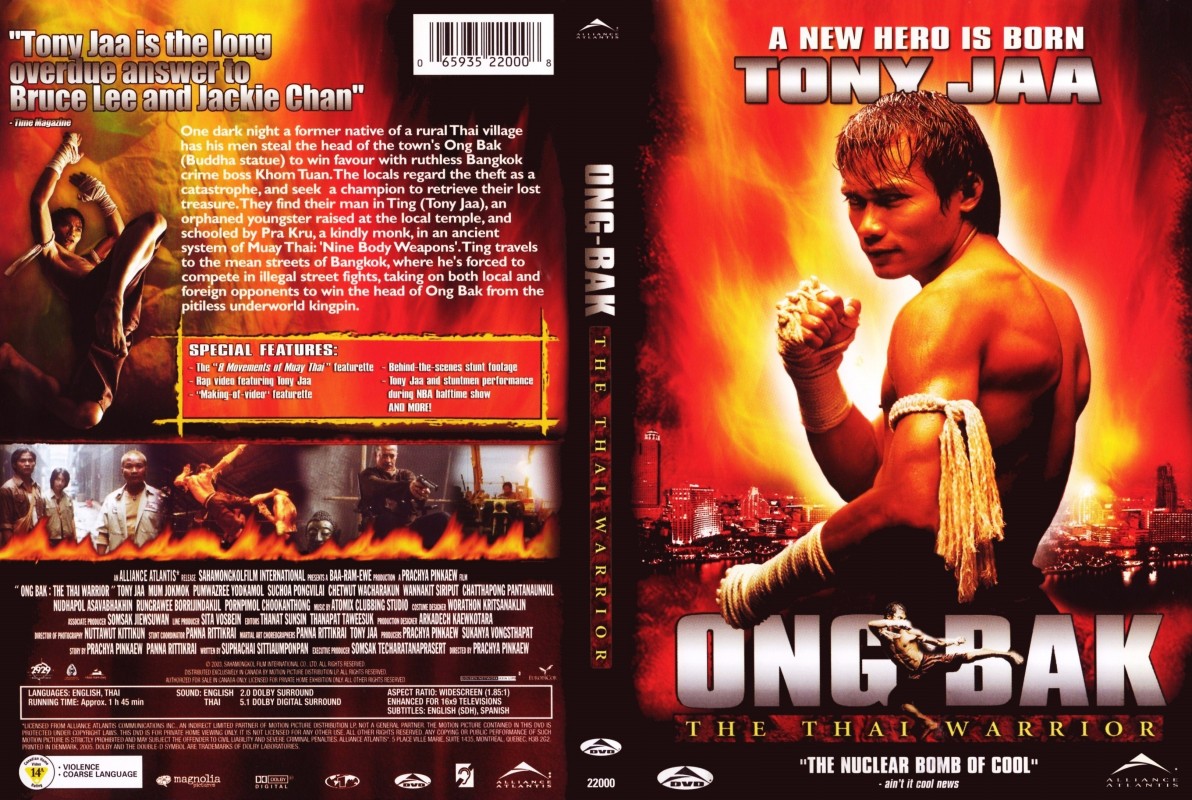
The film emphasizes the contrast between sacred tradition and modern corruption, highlighting how urban greed threatens cultural values. Ting’s journey is as much spiritual as it is physical, as he learns that true strength lies in humility, sacrifice, and perseverance. His refusal to compromise his principles, even when pushed to extremes, sets him apart from those who exploit power for personal gain.
By the time Ting confronts the mastermind behind the theft, he has endured betrayal, pain, and moral temptation. His victory restores Ong-Bak to the village, reaffirming the bond between faith and community. Ong-Bak concludes as a celebration of Muay Thai as both a fighting art and a cultural heritage, leaving a lasting impression of honor, resilience, and respect for tradition.


